- Mar 26, 2024
CREATING DREAD
- Mark Holmes
- 0 comments
How Staging and Composition are used to Create DREAD and POWER.
THE NIGHT OF THE HUNTER is a cinematic masterpiece rich with theatrical, minimalistic visuals that are as thematically powerful today as they were 70 years ago. These examples of compositional framing create visual weight that emotionally communicates the asynchronous power dynamics between pursuer and pursued:
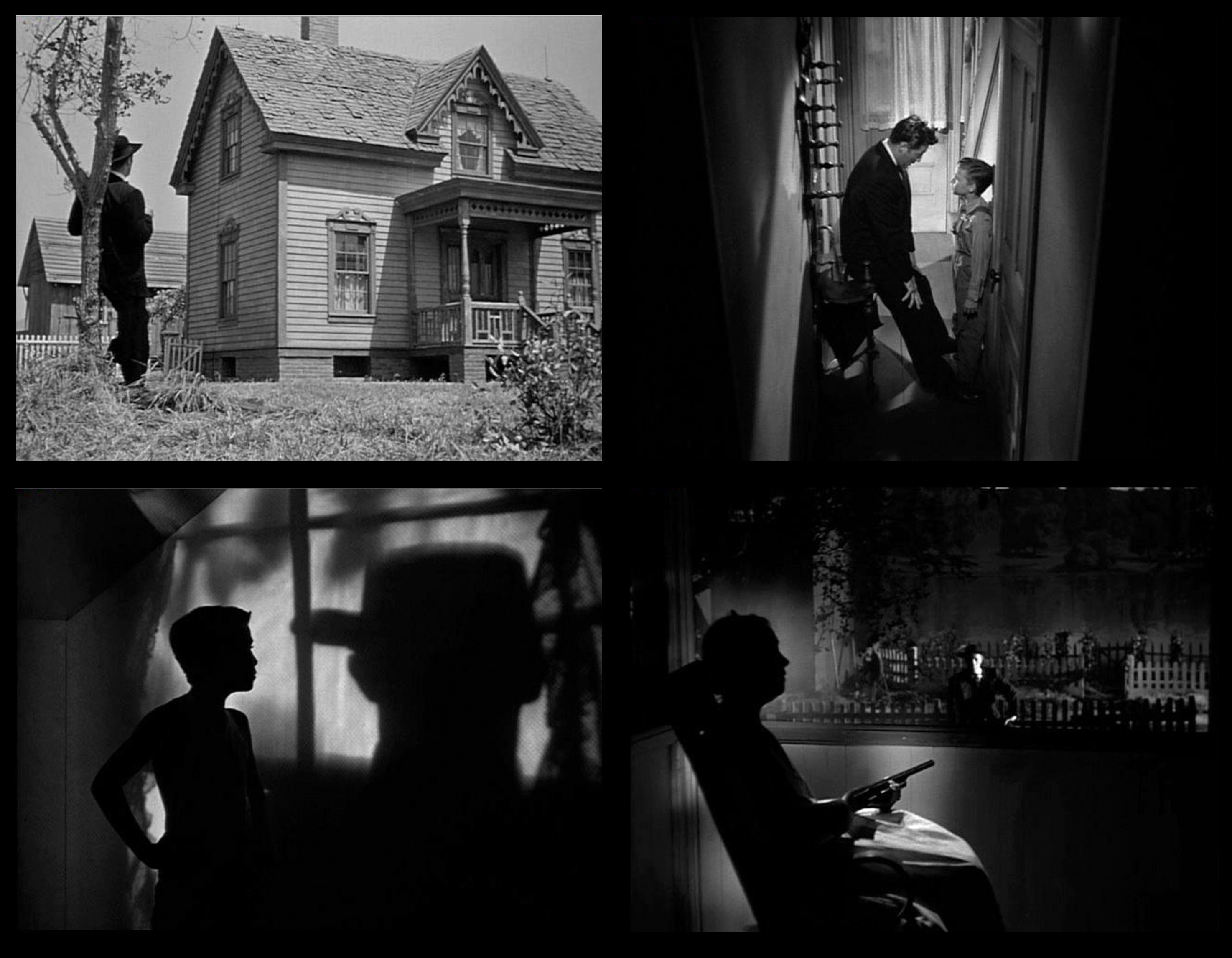
Shot 1: A preacher leans casually against a tree, peering at a quaint house. What feelings does this shot evoke? Do they feel like they belong there, or are they a stranger? What makes the figure seem so ominous?
Shot 2: The preacher talks to a boy in a hallway. What kind of feelings does this shot evoke? What does their positioning and framing suggest about the relationship and power dynamic between them?
Shot 3: The giant shadow of the preacher dwarfs the silhouette of the young boy. What feeling or idea does this size relationship between them evoke?
Shot 4: A shotgun-wielding woman sitting in her porch rocking-chair being watched in the dark by the preacher on the other side of the fence. What does this suggest about their relationship and power dynamic? How is the preacher framed differently than the previous 3 shots, and how does this affect his level of threat?
Nearly every shot in The Night of the Hunter is a successful example of visual design choices serving the narrative and emotional intentionality of the story, while the theatricality of its visual language and storytelling transforms the film into a darkly lyrical, almost childlike fable.
What are your favorite shots from this film, and how do they make you feel?